If you lose power, never run a generator inside your home, garage or carport, and never plug it into a wall outlet. Run it outdoors, at least 20 feet from doors, windows and vents, and use a carbon monoxide alarm. For anything wired into your home, use a professionally installed, approved connection.
Key takeaways
- Distance guidance, not a statistic: CDC says to use generators outside, at least 20 feet away from doors, windows and vents.
- Never plug a generator into a wall outlet. ESFI says generators should be installed by qualified electricians.
- Carbon monoxide cannot be seen or smelled. If anyone has a headache, dizziness or nausea near a running generator, get to fresh air and call 911.
- Report outages through SCE, SDG&E or NV Energy.
- Use battery lights instead of candles, and unplug sensitive electronics to protect them from a surge when power returns.
Last checked: October 13, 2026, 3:40 AM PDT. Alerts, closures and outage maps change quickly, so use the live links in this guide before you act.
Is there a power outage in my area?
Tropical Storm Rachel, later described as a post-tropical system, brought heavy rain, coastal flooding and high surf to parts of Southern California between about October 9 and 12, 2026, and its remnant moisture reached Las Vegas. San Diego County’s alert page listed Tropical Cyclone Rachel on October 9, and the City of Newport Beach declared a local emergency for it. Impacts were not the same everywhere. A KPBS report dated October 12 described 17 downed power lines and five transformer fires in San Diego over the weekend of October 10 and 11. Reports for Newport Beach, Long Beach, Riverside County and Las Vegas did not give outage numbers. Check your own address on SCE, SDG&E or NV Energy.
What to do during a power outage
- Check whether only your home is affected. A tripped breaker can be the cause.
- If neighbors are dark too, report it: SCE 1-800-611-1911, SDG&E 1-800-411-7343.
- Do not go outside to check lines or equipment while it is flooding or if wires may be down.
- Use battery flashlights, not candles.
- Unplug sensitive electronics so a surge on restoration does not damage them.
- Keep the refrigerator and freezer closed.
“Use generators and any gas-powered equipment outside, at least 20 feet away from doors, windows, and vents”
How to use a generator during a power outage safely
CDC and ESFI give clear rules. Generators produce carbon monoxide, which you cannot see, smell or hear.
- Run it outdoors only. Never in a house, basement, garage, carport or on a porch.
- Keep it at least 20 feet from any door, window or vent, even if they are open.
- Use heavy-duty, outdoor-rated extension cords and GFCI protection.
- Let it cool before refueling, and store fuel safely away from the unit.
- Install battery-operated carbon monoxide alarms and test them before the outage.
If anyone has a headache, dizziness, weakness or nausea while a generator is running, get to fresh air and call 911.
Can I connect a generator to my household wiring?
Only through an approved, professionally installed connection. CDC’s flooded-home guidance warns against connecting a generator to your home’s electrical circuits, and ESFI says generators should be installed by qualified electricians. ESFI recommends a qualified electrician install a listed transfer switch. Power that flows backward into the grid is called backfeeding, and it can seriously injure line crews. Never plug a generator into a wall outlet or use a homemade cord with plugs on both ends.
What if the storm damaged my circuits?
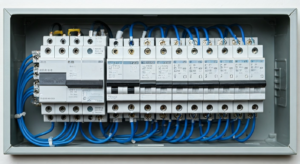
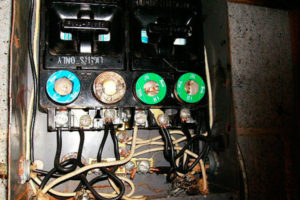
- Warning signs: breakers that trip repeatedly, warm or discolored outlets, flickering lights, buzzing or a burning smell.
- Do not keep resetting a breaker that trips.
- Do not use outlets, switches or cords that were wet.
- Leave affected circuits off and have a qualified electrician assess them.
- If you see smoke, sparks or fire, leave and call 911.
Numbers to have on hand
- Emergency: fallen lines, fire, shock injury, carbon monoxide symptoms: 911
- Southern California Edison: outages and public safety hazards: 1-800-611-1911
- SDG&E: downed power lines (after 911) and outages: 1-800-411-7343
- Riverside County Emergency Management: (951) 358-7100
- Marvel Electricians electrical assistance line (24/7 call center): (408) 762-3109
Official resources for updates
Visit these pages for live alerts, closures and outage maps.
- NWS Los Angeles/Oxnard (Los Angeles, Orange County, Long Beach)https://www.weather.gov/lox/Live watches, warnings and advisories for the Los Angeles area.
- NWS San Diego (San Diego, parts of Orange and Riverside counties)https://www.weather.gov/sgx/Live alerts and forecasts for San Diego and nearby inland areas.
- NWS Las Vegashttps://www.weather.gov/vef/Live alerts and forecasts for Las Vegas and Clark County.
- SDG&E: power outage safety and reportinghttps://www.sdge.com/safety/power-outage-safetyDowned line reporting, outage steps.
- Southern California Edison: check outage statushttps://www.sce.com/outages-safety/outage-center/check-outage-statusOutage status and restoration information.
- Southern California Edison: report an outage or safety issuehttps://www.sce.com/outages-safety/report-outage-safety-issueReporting outages and hazards. SCE lists 1-800-611-1911 for outages and public safety hazards.
- Riverside County power outage guidancehttps://emd.rivco.gov/disaster-preparedness/have-plan/power-outagesCounty outage preparation tips.
- NV Energy: outages and emergencieshttps://www.nvenergy.com/outages-and-emergenciesNV Energy’s outage and emergency section.
- CDC: Prevent Carbon Monoxide Poisoninghttps://www.cdc.gov/natural-disasters/psa-toolkit/prevent-carbon-monoxide-poisoning.htmlGenerator distance and CO alarm guidance.
- CDC: Protect Yourself During a Power Outagehttps://www.cdc.gov/natural-disasters/response/what-to-do-protect-yourself-during-a-power-outage.htmlHealth and safety during outages.
- ESFI: Consumer Electrical Safety During Disastershttps://www.esfi.org/consumer-electrical-safety-during-disasters/Pre-storm steps, generator rules, downed line distance.
- Ready.gov: Power Outageshttps://www.ready.gov/power-outagesFEMA outage preparation.
- Alert RivCo (Riverside County Emergency Management)https://emd.rivco.gov/alert-rivcoSign up for county emergency alerts.
- ESFI: Flood Electrical Safetyhttps://www.esfi.org/flood-electrical-safety-high-water-high-stakes/Electrical safety before and after flooding.
- CDC: Reentering Your Flooded Homehttps://www.cdc.gov/floods/safety/reentering-your-flooded-home-safety.htmlReturning to a flooded home safely.
News reports and other sources cited
- KPBS: San Diego storm clears out, high surf and coastal flood warnings linger (October 12, 2026)https://www.kpbs.org/news/living/2026/10/12/san-diego-storm-clears-out-high-surf-and-coastal-flood-warnings-lingerNews report used for San Diego conditions, the coastal flood advisory and weekend impacts.
- AlertSanDiego: Tropical Cyclone Rachel noticehttps://www.alertsandiego.org/en-us/incident-page.1567.htmlCounty of San Diego incident page for the storm.
- City of Newport Beach: local emergency declared for Tropical Storm Rachel (October 9, 2026)https://www.newportbeachca.gov/Home/Components/News/News/44930/2720City announcement of the local emergency.
Need an electrician for storm damage?
Marvel Electricians’s call center is open 24/7 at (408) 762-3109. Our electricians are available specifically for storm-related electrical problems during this critical period. In the areas we serve, we aim to reach customers within minutes to a few hours, depending on your location and how many calls are ahead of yours. You can also use our contact page. This is our electrical assistance line. For fallen power lines, fire, shock injuries or carbon monoxide symptoms, call 911 first.